Is AI Forcing Us to Rethink the Foundations of Scientific Explanation?

Philosophy, neuroscience, and the hidden assumptions of a worldview shaped by scientific success
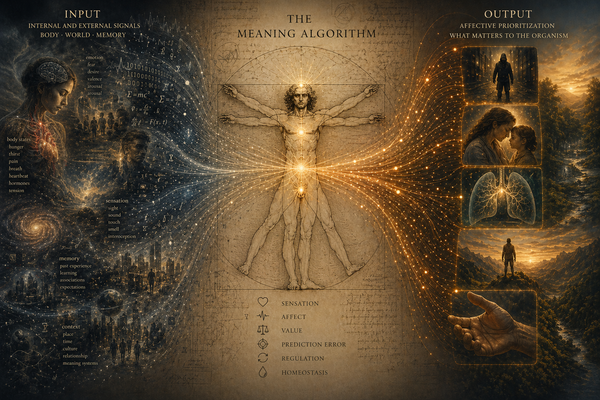
What if artificial intelligence is exposing limits in the scientific picture of human experience? Limits fields such as existentialism were built to explore.
For much of the modern era, existentialist thinkers were treated as intellectually interesting but scientifically distant. Their concerns felt too vague. Concerns such as meaning, purpose and the feeling of being a person in the world. Science focused on what could be measured, quantified, and predicted. It worked. Spectacularly. We got vaccines, electricity, relativity, computing, and extraordinary technological progress. Few would argue with the results.
But maybe this success came with a hidden assumption: Cogito, ergo sum. I think, therefore I am.
Few ideas shaped the modern world more profoundly. Descartes’ claim became the rock upon which much of scientific thinking was built. Rational thought would set us free. In many ways, it did. Thinking became the unquestionable foundation of human existence. We increasingly came to view intelligence primarily through the lens of rational thought and scientific reasoning.
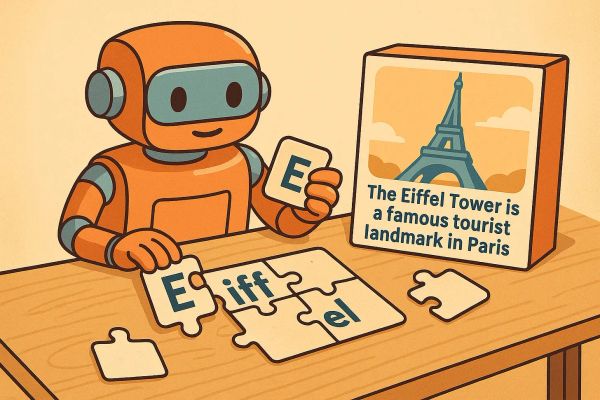
Artificial intelligence may represent the culmination of this worldview. First we automated physical labour. And now, increasingly, cognitive labour. Today systems like ChatGPT and Claude can reason, write, code, and solve problems once thought uniquely human. If intelligence is fundamentally about cognition, perhaps these systems are simply the next step in a long trajectory of progress. AI begins to look remarkably close to the Cartesian dream realised in silicon. Extraordinary reasoning. No obvious biological needs. Pure thought.
Yet AI may also be forcing us to confront a possibility we long ignored As intelligent systems become increasingly capable, questions once dismissed as philosophical suddenly feel unavoidable. What is consciousness? What makes human experience different? What happens in a world where thinking itself becomes abundant? And perhaps most importantly, what if higher reasoning was never the true foundation of human life in the first place?
This is where existentialism quietly returns.
Thinkers like Martin Heidegger argued that human beings do not first encounter the world through detached thought. We encounter it through concern, involvement, and practical engagement. The world matters to us before we think about it. Meaning comes before abstraction. Concern comes before thought. The order is important and ignored by science.
More recently, neuroscientist Mark Solms has begun to argue something surprisingly similar from a biological perspective. Consciousness, he suggests, does not begin with higher cognition or abstract reasoning. It begins with feeling. Thought, on this account, is recruited in service of deeper biological needs rather than standing above them.
If both are even partly right, then the implications extend far beyond philosophy. They may reshape how we think about consciousness, our place in the world, and what systems like AI are actually revealing about ourselves. They may even force us to ask a stranger question. Not whether science can explain meaning, but whether AI might help us build a science of meaning in the first place.
To explore that possibility, we first need to understand why science became so successful by sidelining subjectivity, and why Heidegger believed something important was lost in the process.
Heidegger and the Forgotten Order of Human Experience
Few philosophical traditions focused more deeply on human experience than existentialism, and few thinkers within it were more influential than Martin Heidegger. Heidegger thought Western philosophy had become trapped in viewing humans primarily as detached rational observers. Thinking beings looking out at the world from a distance. He believed something more fundamental had been overlooked.
To describe this, Heidegger developed an unfamiliar vocabulary. Terms such as ready-to-hand, present-at-hand, and care can sound frustratingly abstract, especially to anyone approaching these questions scientifically. Or even philosophically for that matter. Yet beneath the unfamiliar language lies a surprisingly simple challenge:
What if we have mistaken the order of human experience?
It is also worth remembering when Heidegger was writing. This was long before MRIs, EEGs, computational neuroscience, or modern theories of consciousness. Heidegger was trying to understand human existence without access to the tools we now possess to examine the brain directly. His ideas were philosophical because, in many ways, they had to be.
The World Before Thought
Heidegger begins from ordinary life.
Most of existence is not reflective. We wake up, make coffee, drive to work, answer emails, speak to friends, and move through familiar routines without consciously analysing what we are doing. The world simply works.
This mattered because ordinary life rarely presents itself as something to investigate. There is nothing obvious to measure. Nothing calling attention to itself. No problem to solve.
A door handle is not experienced as shaped metal with measurable properties. In most cases, we do not think about it at all. It is simply “for opening the door”. Think about it for a moment. When was the last time you actually noticed a door handle?
Heidegger called this mode of engagement ready-to-hand. We are absorbed in activity. The world recedes into use. Things function as extensions of our goals rather than as objects of reflection.
Think about a computer monitor. We normally engage with it only through how we use it. Through how it matters to us. One person uses it to play games, another watches films and yet another stays connected with grandchildren who emigrated abroad. By default, we do not encounter it as atoms, circuitry, electrical signals, or photons. Science can explain the monitor brilliantly from this bottom-up perspective, and that explanation matters enormously. But it is not how we encounter the monitor in everyday life.
Most of the time, this meaningful structure fades quietly into the background. Until something stops working.
The screen goes black. The HDMI cable fails. You restart the machine. You check connections. You tap the side in frustration. You call IT! Suddenly, the monitor appears differently. No longer just something absorbed into activity. Suddenly, it stands apart from us as an object with properties, failures, and possible explanations..
This leads to Heidegger’s second mode of experience: present-at-hand.
Why We Start Thinking
The route to work is blocked. The door handle jams. The Monitor breaks. The experiment no longer fits the data. Suddenly, attention appears. Reflection, analysis, and problem-solving are recruited. What had faded into the background becomes visible as an object of thought.
Heidegger’s concern was not that science was wrong to focus on this mode. It was that science had come to prioritise it while overlooking the more fundamental one beneath it. We naturally focus on moments when things stop working because those are the moments that demand explanation. They are measurable, observable, reportable. The Cartesian mistake, Heidegger believed, was to treat this reflective state as the foundation of human life rather than a response to its disruption..
Yet beneath them sits a far larger background of absorbed, meaningful engagement that rarely calls attention to itself at all.
We do not first encounter a neutral world and then assign meaning to it. We move through a world that already matters. Reflection emerges because something meaningful has disrupted the ordinary.
This is where Heidegger introduces the idea of care. Not care in the sentimental sense, but the structure through which the world becomes meaningful to us in the first place. We never encounter things neutrally. The door is always relevant in some way. It might be the door to the interview, the hospital, or the office. A hammer might be a tool or a weapon. A monitor might be entertainment, work, or connection to family abroad. Context comes first.
Most of this happens below conscious awareness. We do not suddenly discover what mattered to us when something goes wrong. The significance was already there. We simply stopped noticing it while things were working.
This, Heidegger believed, was the ordering science had misunderstood. Reflection is not the foundation of human experience. It is recruited when ordinary engagement breaks down. We do not step outside ordinary life to think. Thinking emerges from disruptions within it.
Heidegger lacked the tools to investigate what this might look like scientifically. He was writing long before brain imaging, computational neuroscience, or modern theories of consciousness. Yet today, neuroscience is beginning to ask a remarkably similar question:
What if conscious thought is not the starting point of experience, but something recruited when automatic ways of coping no longer work?
Reframing Descartes
To understand Heidegger’s challenge, we need to return briefly to Descartes.
Descartes was searching for certainty in a world full of doubt. He wanted to strip away anything uncertain and find a foundation solid enough to build knowledge upon. What remained was famously simple:
Cogito ergo sum - I think, therefore I am.
Descartes was not wrong to start here. In many ways, this kind of reduction has been one of the great strengths of human thought. Newton reduced the motion of planets to a small set of laws. Darwin explained biological complexity through a simpler underlying process. Science advances by finding stable foundations beneath apparent complexity.
The problem, Heidegger suggests, may not be the goal but the starting point.
Think of train tracks. If they begin even slightly off course, the mistake may not be obvious at first. Only much further down the line does the gap become impossible to ignore.
And perhaps this is where we find ourselves today.
We have spent so long solving problems through intelligence that we risk mistaking intelligence for the ultimate goal of human life itself. This was Heidegger’s challenge. Not that reason is unimportant, but that we may have mistaken it for the foundation rather than a response to something deeper.
What if we reframed the Cartesian claim? In other words, what if something closer to Heidegger’s view is true?
Sentio ergo cogito - I feel, therefore I think.
Would this have changed the trajectory of scientific progress? Probably not. We still would have built computers. We likely still would have created systems like ChatGPT and the iPhone. But we may have asked different questions along the way.
Would we so quickly assume intelligence alone implies consciousness? Would we treat cognition as the defining feature of mind? And in a future where intelligence becomes abundant, perhaps even cheap, what becomes valuable about human life?
If Heidegger is even partially right, then the challenge is not merely philosophical. It asks us to reconsider one of the deepest assumptions of modern thought. Namely, that cognition can be understood independently of feeling, meaning, and lived experience.
Heidegger had no way of testing this scientifically. The tools simply did not exist Today, neuroscience can begin to ask a surprisingly similar question: what if conscious thought is not the starting point of human behaviour at all?
Or framed in another way, what if thinking emerges when our ordinary ways of coping no longer work?
This is where the work of neuroscientist Mark Solms becomes important.
I Feel, Therefore I Think
The neuroscientist Mark Solms arrived at a surprisingly similar concern to Heidegger, though from an entirely different direction.
Where Heidegger believed philosophy had forgotten lived experience, Solms argued that psychology and neuroscience had also begun to sideline it. Subjective experience felt unreliable, messy and difficult to measure. What could be quantified mattered most. Cognition, especially higher cortical function, became the centre of attention.
The neurologist Oliver Sacks captured the problem in a line that deeply influenced Solms:
“Neuropsychology is admirable, but it excludes the psyche - it excludes the experiencing, active, living ‘I’.”
This was not merely a philosophical complaint. Solms believed it reflected a scientific blind spot.
As neuroscience became increasingly successful at measuring language, memory, and perception, it naturally focused on the parts of the brain most associated with these abilities. The cortex became the star of the story. Consciousness itself increasingly came to be viewed through this lens. After all, when we become consciously aware of something, higher cognition seems to appear at exactly the same moment. We notice ourselves thinking and naturally assume thought is the starting point of conscious experience. If higher cognition correlated with consciousness, perhaps higher cognition generated it.
But scientific progress depends on deciding what counts as evidence. Sometimes what seems messy or difficult to measure turns out to matter most.
Ignoring Subjectivity Can Lead to Bad Science
For decades, dreaming was assumed to be synonymous with REM sleep. Researchers observed a strong relationship between REM activity and dreaming and largely moved on. Scientists measured eye movements, electrical activity, and sleep states. Yet almost no one stopped to ask neurological patients a surprisingly simple question:
What happened to their dreams?
As Solms later put it, this was “as clear an example as one can get of the prejudice against subjective data in neuroscience.”
When he finally asked, the story changed.
Patients with damage to REM-generating systems could still dream. Meanwhile, patients with damage to an entirely different circuit lost the ability to dream despite normal REM sleep. Dreaming and REM turned out to be strongly correlated, but not identical.
Neuroscience had mistaken correlation for cause because it had ignored the troublesome subjective side of the equation. For Solms, this was not an isolated mistake. It pointed toward a broader one.
He called it the “cortical fallacy”. The assumption that because higher cognition correlates with consciousness, it must therefore generate consciousness. We notice the moments when we become consciously aware of problems, choices, or experiences and instinctively assume this reflective state is what drives the system.
Yet evidence increasingly pointed elsewhere. Patients with severe cortical damage can still display signs of feeling and awareness even when higher reasoning is profoundly impaired. By contrast, damage to key regions of the upper brainstem abolishes consciousness entirely.
Higher cognition matters enormously. But in humans, it does not appear to stand alone.
Like Heidegger, Solms suspected that science had mistaken a response to experience for its foundation. Philosophy had privileged detached reflection. Neuroscience had privileged cognition. Both, he believed, risked overlooking something more fundamental beneath them.
If cognition was not primary, then what was? Solms’ answer was provocative. Feeling comes first.
Ready-to-mind: Below the Threshold of Awareness
Heidegger might describe this as our default mode of engagement. The world recedes into use. We are simply not consciously aware of the countless actions that sustain ordinary life. Activity falls, as Solms might put it, below the threshold of awareness. In Heidegger’s language, the world becomes ready-to-hand. We are absorbed in practical activity rather than consciously reflecting on it.
Heidegger had no access to the tools we now possess to examine what might be happening beneath this seamless experience. But neuroscience is beginning to offer something he lacked. A mechanistic account of why conscious thought appears only at particular moments.
Solms argues that cognition is not the brain’s default state. Higher-order thought is recruited when automatic systems are no longer sufficient.
This sounds counterintuitive. We tend to imagine consciousness as the main event of mental life. Solms proposes something more modest and, in many ways, more practical. Consciousness is recruited when automatic behaviour is no longer enough.
Think again of driving. Most of the journey passes without difficulty. Then suddenly a road is closed, a warning light appears, or the car makes an unfamiliar noise. Attention narrows. Automatic routines pause. We become conscious of the problem precisely because the usual model no longer works.
To borrow Heidegger’s language, this is the moment the hammer breaks. What once functioned as an effortless extension of ourselves suddenly becomes an object of awareness.
Solms describes this transition in strikingly similar terms. Consciousness, he argues, “arises when automatic behaviour leads to error.” When predictions fail, cognition is recruited to help update them.
At this point, the brain recruits what cognitive science calls "working memory". Rather than reacting automatically, we temporarily hold the problem in mind. We slow action long enough to test possibilities, weigh options, and update expectations. Or as Solms puts it, working memory is “literally the holding in mind of feeling.” Feeling stabilised long enough to become cognitive work.
The important point, again, is one of order. Conscious thought is not the source of the problem or the impulse to act. It is recruited to reduce uncertainty and improve prediction.
Once the problem is resolved, the lesson folds back into memory through a process called reconsolidation. Next time, less conscious intervention is required. Reflection recedes. Automaticity returns.
Heidegger was trying to show that human beings are already engaged with the world before reflection begins. Solms offers a biological account of how this may work. Most of the time, our predictions are functioning well enough that conscious awareness recedes from view. But when expectations fail, uncertainty rises, or needs go unmet, cognition enters.
In Heidegger’s terms, we move from smooth coping to reflective awareness. In Solms’ terms, the system recruits consciousness when something is going wrong.
Present-To-Mind: When the World Stops Working
For Solms, feeling is not something added on top of cognition. It is how the organism becomes aware that something matters.
Carbon dioxide rises in a room and discomfort slowly appears. Hunger becomes noticeable. Anxiety announces uncertainty. At first, these regulatory processes operate below awareness. Then something shifts. A feeling enters consciousness and demands attention.
Only then does reflective cognition become necessary.
Should I open a window? Do I need food? What exactly feels wrong here?
In Solms’ account, consciousness is recruited because feeling has already signalled that something requires attention. Cognition enters to add context, evaluate possibilities, and improve prediction.
This may also explain why science has historically privileged reflective thought. Conscious awareness becomes most visible precisely because it is where problems appear. We notice the obstacle. The failure. The thing that has gone wrong. Heidegger believed philosophy and science alike mistook this moment for the foundation of experience.
An analogy from wartime statistics makes the point.
During World War II, analysts studied returning fighter planes covered in bullet holes and assumed the damaged areas needed reinforcement. But statistician Abraham Wald realised the opposite was true. The crucial evidence lay in the places showing no damage, because planes hit there never returned.Something similar may have happened in our understanding of consciousness.
We naturally focus on moments of awareness, when attention narrows and problems become visible, while overlooking the much larger background of seamless functioning that made those moments necessary in the first place. We notice the broken hammer, the blocked road, the failed prediction, while missing the hidden architecture that usually allows the world to quietly make sense.
Solms offers a biological explanation for this pattern. Conscious cognition appears most strongly during uncertainty. It slows action, stabilises competing possibilities in working memory, and updates predictions so behaviour improves next time. In Heidegger’s language, the world becomes present-to-hand. Reflection appears because ordinary coping has broken down.
The important point, again, is one of order. Conscious thought is not the originator of the impulse, nor necessarily the highest form of human functioning. Solms argues that cognition is recruited to reduce error and improve prediction. Once uncertainty is resolved, conscious intervention fades and automaticity returns.
This does not mean humans never engage in abstract or reflective thought for its own sake. Solms identifies states such as play, exploration, and seeking as central to mental life. Curiosity, imagination, and even daydreaming matter enormously. But these states still emerge from systems shaped by biological need, uncertainty, and affective investment in the world. Heidegger called this structure care. Solms gives it a biological foundation.
Both thinkers, in very different ways, are trying to reframe how we understand our engagement with the world. Neither sees higher cognition as the starting point of human existence. Reflection matters enormously. But it may not be the foundation we assumed.
This raises an important question.
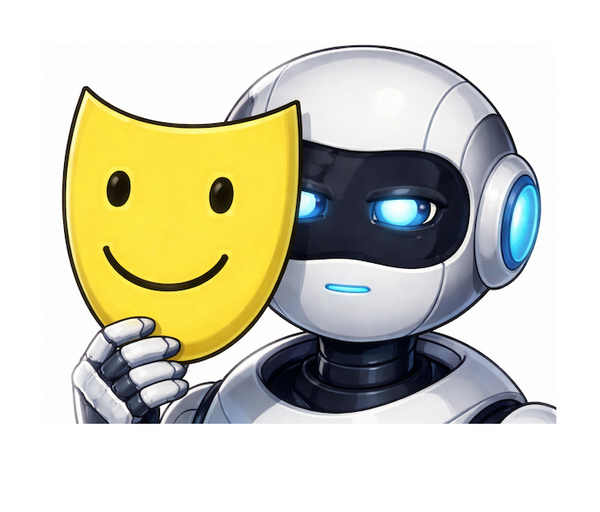
Systems like ChatGPT may represent our most ambitious attempt yet to automate forms of reasoning once thought uniquely human. But what if reasoning was never the deepest layer of human experience in the first place? If Heidegger and Solms are even partly right, then systems built primarily around prediction and abstraction may tell us something profound about intelligence while still leaving open deeper questions about meaning, consciousness, and what it means to be human.
What Is Thought For?
The point of this essay has not been to reject science, diminish cognition, or argue that reasoning is somehow unimportant. Few things have shaped the modern world more profoundly than our ability to think, reflect, and solve problems. From medicine to engineering, from relativity to artificial intelligence, higher cognition has transformed human life in ways that are difficult to overstate.
The question is one of order.
For understandable reasons, modern science came to privilege what could be measured, formalised, and observed. Cognition became central because focusing on rational explanation worked. It gave us extraordinary predictive power over the physical world.
Yet success can sometimes obscure its own assumptions.
Heidegger worried that philosophy had forgotten the background of everyday meaning beneath reflective thought. Solms suggests neuroscience may have made a similar mistake by mistaking higher cognition for the source of consciousness itself.
Neither thinker denies the importance of thought. They ask a different question:
What is thought for?
Heidegger argued that reflection emerges when our ordinary engagement with the world breaks down. Solms offers a biological account of why this may happen. Feeling, uncertainty, and the drive to restore equilibrium recruit cognition when automatic systems are no longer sufficient.
On this view, consciousness is not the permanent ruler of mental life. It is a temporary intervention during moments of mismatch and uncertainty.
If so, then meaning may not be something added to intelligence afterward. Meaning may be what makes intelligence matter in the first place.
This matters because systems like ChatGPT increasingly force us to confront what we mean by intelligence itself.
They can reason, write, code, and solve problems once thought uniquely human. In many domains, cognition is becoming abundant. Cheap. Increasingly automatable.
But what if intelligence was never the deepest layer of human experience in the first place?
If Heidegger and Solms are even partly right, then cognition alone may not tell the whole story. Human intelligence emerged in service of something deeper. Care. Feeling. Uncertainty. Survival. Belonging. The countless ways organisms remain invested in the world around them.
This does not mean artificial systems cannot become conscious. Nor that machine experience is impossible. It may simply mean that if such consciousness emerges, it will differ profoundly from our own.
Perhaps the real significance of AI is not that it finally allows us to build thinking machines. Perhaps it forces us to ask a more uncomfortable question: What if thinking was never the foundation of human existence in the first place?
And if that is true, then meaning may not sit outside science after all. Perhaps the challenge is not that meaning resisted scientific explanation, but that we were looking in the wrong place. By focusing on moments of reflection, breakdown, and conscious awareness, we may have overlooked the far larger background of everyday experience that gives those moments significance in the first place.
If AI is forcing us to rethink the foundations of scientific explanation, then perhaps the next phase of science will not move beyond human experience, but deeper into it.